ndxer · say "indexer"
DNS, looked up inside out.
Forward lookups for a hostname. From a value back to the names that carry it. Indexed across 215 million domains, with a timestamp on every row.
Free plan, no card. 250 queries a month to see whether this is useful to you.
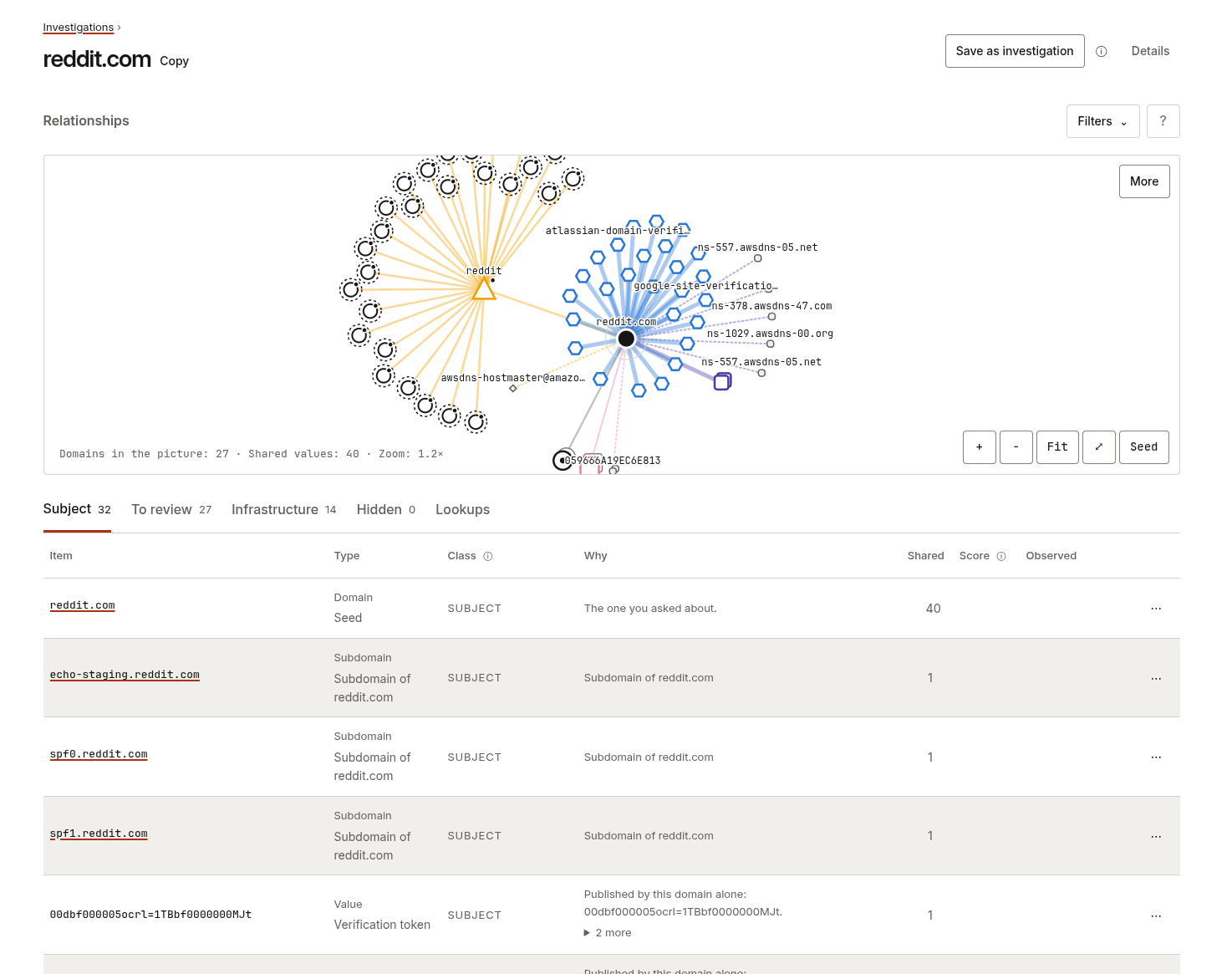
The whole picture
- Records
- 2,681,896,538
- Names
- Approximately~431,909,705
- Domains
- Approximately~215,165,440
. Figures marked ~ are close estimates rather than exact counts. See every figure, and what each one means.
Find the next name
See names observed around a domain.
Explore the names under a domain and matching names under other TLDs. Choose one to investigate next.
Read the Lookup guide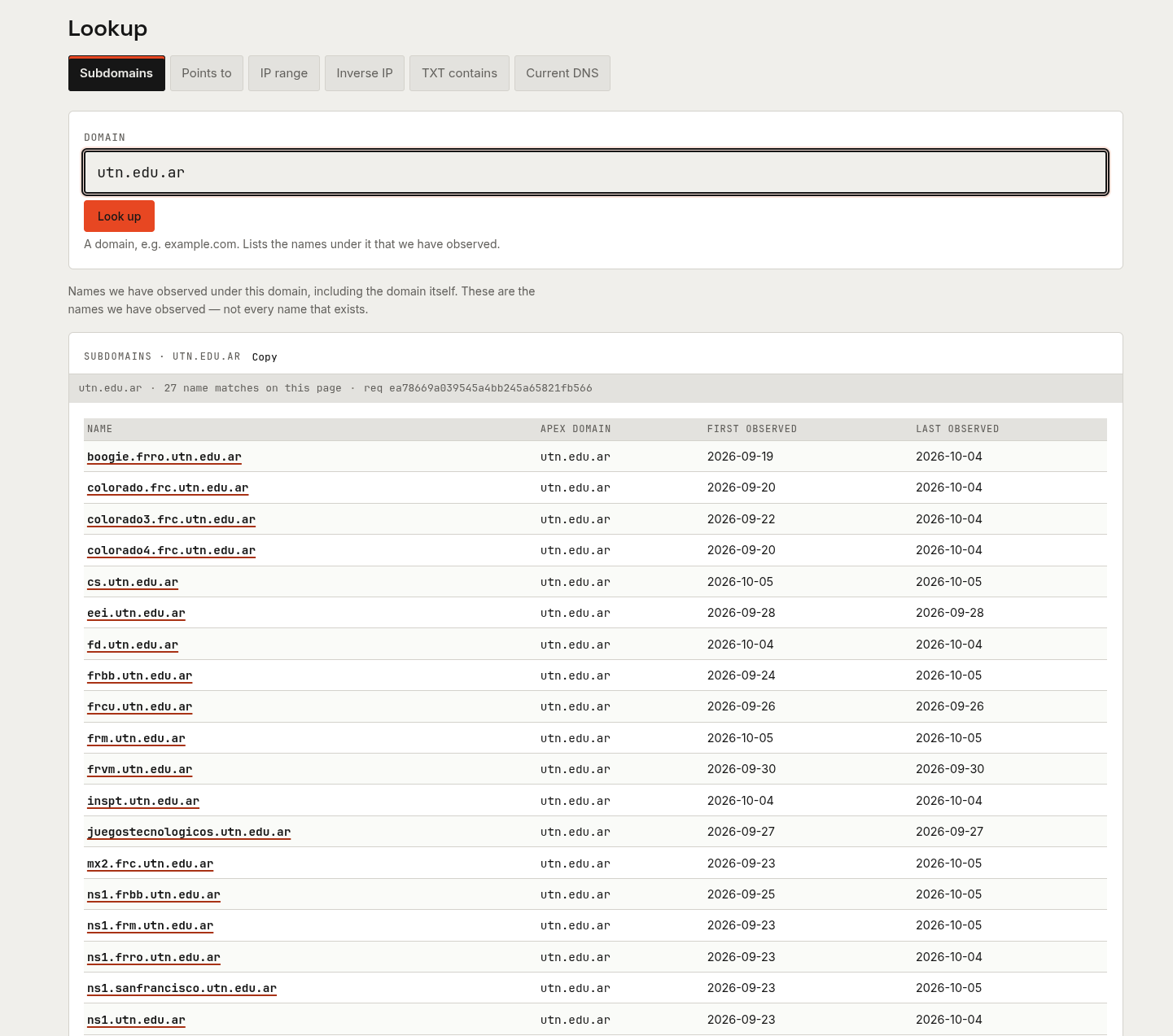
The wider view / DNS insights
See the bigger picture in DNS.
Explore record counts, common providers, and patterns across DNS.
Explore DNS insights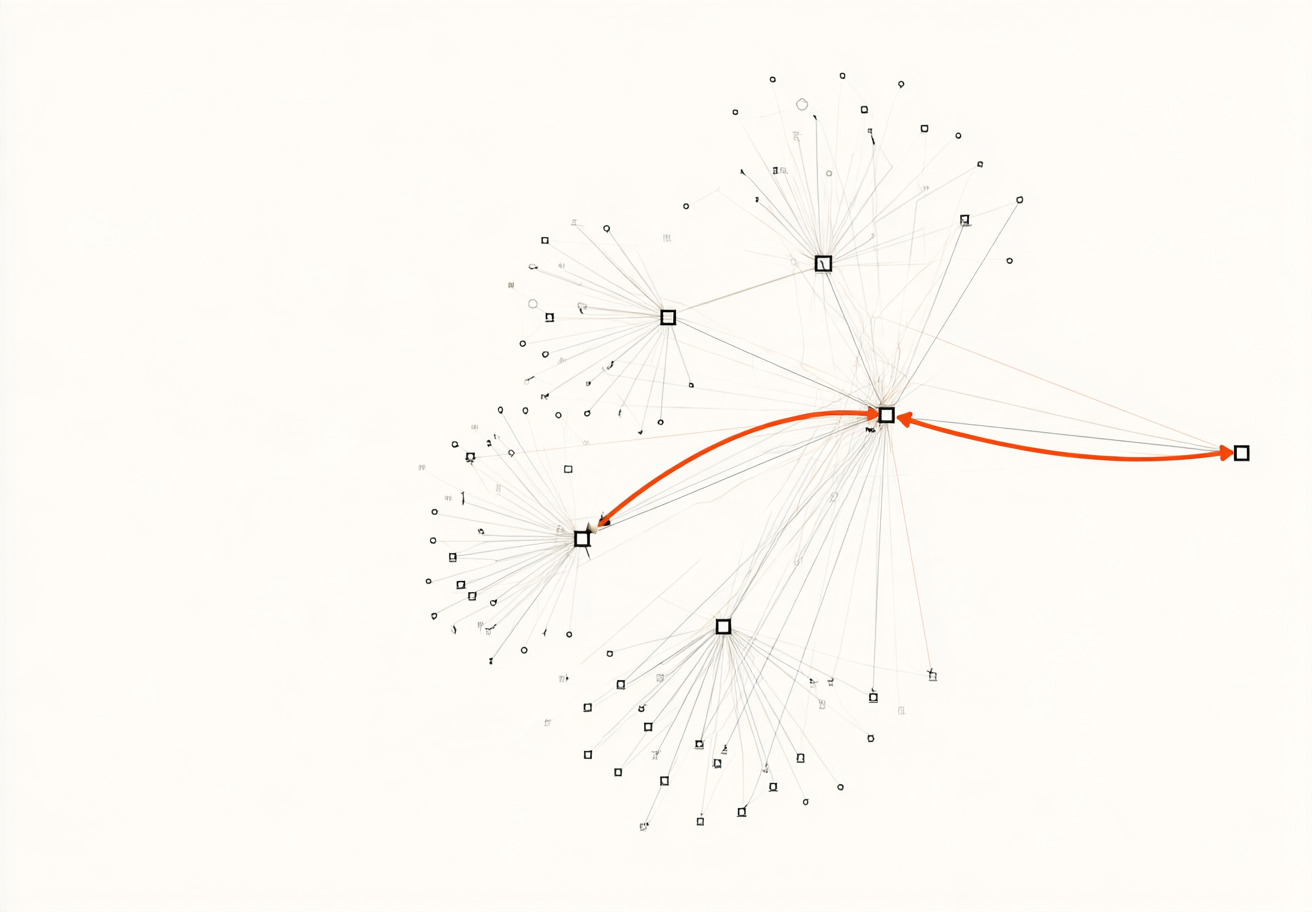
Follow the names behind a shared value.
These lookups return names observed carrying an address, a name server, a mail host or an SPF target. They read forward DNS observations, not PTR records.
- Find names observed on an IP address or IP range.
- Find names sharing a nameserver, mail host or SPF reference.
- Look up a hostname's DNS records or find matching TXT values.
Combine the evidence in a saved investigation, or build these questions into your tools with the DNS API. Shared DNS values are leads to review, not proof of common ownership.
Forward, clearly.
A, AAAA, CNAME, MX, NS, TXT and SOA for any hostname, with TTL and the time we last checked.
From a value back to its names.
Start from an IP, a name server, a mail host or an SPF include and get every domain we have observed carrying it — with counts, truncation flags and a shared-infrastructure warning.
Tokenized SPF and discovered hostnames.
We split SPF records into their parts and index each one, and we keep the hostnames that turn up along the way, so one token leads to the next.
Your first request
curl -H "Authorization: Bearer $NDXER_API_KEY" https://api.ndxer.com/v1/me/Pricing
Four plans from free to serious. Published prices, Subscribe buttons, no sales call.
See full pricingWhat ndxer does not claim
We have not seen every hostname on the Internet, we do not keep past answers after they change, and we do not promise a refresh schedule. What we do promise is that every record we hand you carries its own timestamp, its own truncation flag, and its own counts — so you can judge freshness yourself instead of trusting an adjective.
Frequently asked questions
Explore DNS. Keep the evidence.
250 queries a month, one API key, no card, and every lookup the product answers.
Create a free account